Our team
The credentials behind every conversation on The Path.
A neuroscientist CEO with 2,600+ research citations. The world’s most recognized coach. Researchers in machine learning, individual differences, and both clinical and counseling psychology. Every credential here shows up in the product.
Co-Founders
-
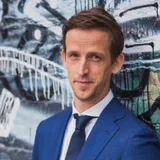
Dr. Anson Whitmer
CEO & Co-Founder
PhD, Psychology & Neuroscience
Dr. Whitmer holds a joint PhD in Psychology and Neuroscience from CU Boulder and completed an NIMH-funded post-doc at Stanford. His peer-reviewed research on rumination has been cited over 2,600 times, and it's the direct scientific foundation for how The Path's AI challenges cognitive patterns rather than validating them.
- Cognitive Neuroscience
- Rumination Research
- Evidence-Based AI
Read full bio →
-
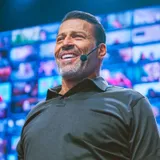
Tony Robbins
Co-Founder
Coach · Author · Philanthropist
Tony Robbins has coached more than 50 million people over 45 years, including CEOs, athletes, and heads of state. The coaching models he refined over four decades of live work — the 6 Human Needs, State→Story→Strategy, and his Breakthrough method — now power the AI inside The Path.
- Peak Performance
- 6 Human Needs Framework
- Breakthrough Coaching
Read full bio →
-

Tyler Sheaffer
CTO & Co-Founder
Tyler is the technical architect behind The Path's proprietary AI engine. As CTO, he built the AI infrastructure, memory, and personalization engine behind The Path.
- Engineering Leadership
- AI Engineering
- Personalization
Read full bio →
Clinical Team
-
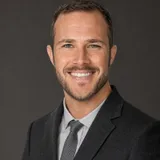
Dr. Daniel R. Leopold
Clinical AI Researcher
PhD, Clinical Psychology · Licensed Psychologist
Dr. Leopold is a Licensed Psychologist with a PhD in Clinical Psychology and Neuroscience from CU Boulder. He’s a core member of The Path’s AI team — leading safety reviews, refining clinical guardrails, and serving as the clinical guide on product and company-wide decisions.
- Evidence-Based Psychotherapy
- Machine Learning
- Clinical Assessment
Read full bio →
-
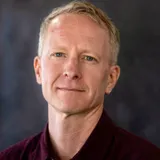
Dr. Matt Englar-Carlson
Counseling Psychology Professor
PhD, Counseling Psychology
Dr. Englar-Carlson specializes in evidence-based therapy and culturally responsive mental health care. As Department Chair of Counseling at Cal State Fullerton, founder of the Center for Boys and Men, and a Fellow of the American Psychological Association, he brings decades of clinical practice and outreach research to The Path's clinical team.
- Evidence-Based Therapy
- Counseling Psychology
- Culturally Responsive Care
Read full bio →
-

Dr. Jennifer Huberty
CEO & Founder, Fit Minded, Inc.
PhD · Chief Science Officer
Dr. Huberty is a behavioral research scientist with 25+ years translating rigorous science into digital health strategy. With more than 250 peer-reviewed publications, she leads The Path's clinical science strategy and execution of science as fractional Chief Science Officer. She also chairs The Path's Scientific Advisory Board and was previously the Head of Science at Calm.
- Behavioral Research
- Digital Health Science
- Randomized Controlled Trials
Read full bio →
-

Dr. Kelsey McAlister
Research Science Manager, Fit Minded, Inc.
PhD · Health Behavior Research
Dr. Kelsey McAlister is a Health Behavior Scientist who leads the science team at Fit Minded, integrating evidence-based science into client strategy and product development. She holds a PhD in Health Behavior Research from the Keck School of Medicine at the University of Southern California, with over 40 industry publications. She brings particular expertise in evaluation frameworks for AI-enabled mental health tools, focused on assessing safety signals and supporting evidence generation.
- Health Behavior Science
- Evidence-Based Product
- Digital Health Standards
Read full bio →
Our Journey
The Path didn’t start as The Path. It started with a loss.
When CEO Anson Whitmer was 19, his uncle and best friend died by suicide. He went to graduate school for psychology and became an expert in mood disorders. During his postdoc, his cousin died the same way. He left academia. The field was making real progress on understanding mental illness; almost none of that progress was reaching the people who needed it.
He joined Calm as the founding data scientist and stayed through the scale-up, from a one-bedroom apartment to a $2 billion valuation, eventually leading data science and AI. There he met co-founder Tyler Sheaffer, Calm’s founding engineer and a member of the five-person executive team. Tyler, in Anson’s words, built the product “with his bare hands.”
Calm reached millions. It wasn’t reaching men. Men account for roughly 80% of suicides in the U.S., which means any approach to the suicide crisis that can’t reach men isn’t really an approach.
In 2022 they founded Dig Deep, Inc. and launched Mental, the first mental health app built for the kind of man who doesn’t do therapy and doesn’t use apps like Calm. Audio sessions taught by people like world heavyweight boxing champion Deontay Wilder. And, quieter at first, an early bet on AI therapy"AI therapy" describes The Path's AI-powered self-help and coaching tools. The Path is software, not a licensed medical provider, and does not diagnose, treat, or replace professional clinical care.: a format that removed the objection that kept many men out of treatment in the first place — having to say it out loud, to another person.
The first two generations of the AI therapy helped people who stuck with them. Engagement was the problem. In late 2024, a third generation shipped on a new architecture and quickly became the most-used feature in the app. Men who had avoided therapy and mental health apps were doing regular work on themselves through an AI.
Limiting the technology to men in the U.S. was the wrong constraint. The same system already worked in over 50 languages, and the need was the same everywhere.
Around that point, Tony Robbins reached out. He’d been thinking about how AI could carry his work beyond him, at greater scale than he’d reached in 45 years of live coaching. He’d sampled the market and said this was the best AI therapy he’d found. He asked about joining forces.
Mental still exists. More than 4 million messages have moved through its AI therapist. In April 2026, the team launched The Path on the same engine: built for everyone, available in over 50 languages across the sessions and the entire app, and focused entirely on AI therapy. The product is a platform of AI therapists with different specialties and different styles. A Tony Robbins AI is on the way, so you can work a relationship issue with one AI therapist and a career goal with Tony at the same time.